
SKINCARE BY AGE

What Your Skin Actually Needs Over Time
Skin changes gradually throughout life. These changes are shaped by genetics, sun exposure, hormones, lifestyle and overall skin health rather than age alone. Understanding these changes helps guide what skincare actually makes sense at different stages of life.
What often creates confusion is the idea that skincare needs to be complex. In reality, skin does best when care reflects what it actually needs at each stage. Protection and consistency matter far more than early escalation.
This page explains how skin typically changes over time. It outlines what skincare priorities make sense at different ages. It also explains when treatments may be considered in order to support long term goals and ensure best possible results.
Skincare in Your 20s

In your 20s, skin is generally resilient. Cell turnover is efficient. Collagen levels are high. The skin barrier usually functions well. Most concerns at this stage relate to acne, oil imbalance or sensitivity rather than ageing.
For most people in their 20s, skincare can remain very simple, comprising of a gentle cleanser, moisturiser suited to their skin, and consistent daily sun protection.
This is also the decade where skin is most commonly over-treated. Strong exfoliants, frequent acids and early retinoid use are often introduced due to marketing pressure rather than biological need. For many people, this leads to irritation or long-term sensitivity without improving skin health.
At this stage, skin usually responds best to a simple, consistent routine focused on:
• Gentle cleansing that does not strip the skin barrier
• Daily moisturising to support comfort
• Consistent sun protection which has the greatest long-term impact
For some people, particularly those dealing with acne or post-inflammatory hyperpigmentation, targeted treatments may be considered. This can include superficial chemical peels or microneedling where appropriate. In cases of more persistent or severe acne, retinoid use or further specialised treatment may be needed. These decisions should be guided by how the skin responds rather than age alone.
Skincare in Your 30s

In your 30s, changes tend to be subtle but measurable. Collagen content has been estimated to decline by approximately 1% per year beginning in early adulthood, as reported in a classic study published in the British Journal of Dermatology in 1975 by Shuster, Black and McVitie.

More recent research published in the Journal of Anatomy in 2014, "Age-related dermal collagen changes during development, maturation and ageing", confirmed that dermal collagen density and bundle thickness progressively decrease with age, reflecting gradual structural change within the skin. Over time, these shifts contribute to reduced firmness and resilience.
Pigmentation or early texture changes can become more noticeable at this stage, often reflecting cumulative sun exposure from earlier years rather than sudden ageing.
This stage is best approached as one more of support rather than correction. Many people still do well with a simple routine when it maintains hydration and supports the skin barrier. Active serums such as retinoids can be introduced where appropriate to address early signs of ageing if present.
At this point, most people benefit from a routine that still remains simple, but with a greater emphasis on hydration and barrier support.
For many, this means:
• A reliable moisturiser that supports barrier function
• Consistent daily sun protection
• Introduction of active serums when appropriate
For some individuals, treatments may be explored for concerns such as pigmentation, acne scarring or early dynamic lines. This can include microneedling, targeted chemical peels, carefully selected botulinum toxin treatments and skin-supportive injectable treatments such as Sculptra®, Radiesse®, Profhilo® and NCTF® where appropriate. These approaches should compliment daily skincare rather than replace it.
Skincare in Your 40s

In your 40s, skin changes often feel more noticeable as collagen loss continues gradually over time. While this structural decline is steady, broader ageing research published in Nature Aging in 2024, "Nonlinear dynamics of multi-omics profiles during human aging", identified a measurable biological shift occurring around the mid-40s. Although the study was not specific to skin, it suggests that this decade represents a wider phase of change in the body, which may help explain why skin can seem less resilient, less predictable or slower to recover.
By the mid-40s, overall collagen levels are reduced by around 20 to 25% compared to early adulthood. Cell turnover slows further and dryness becomes more common. The skin barrier may be less resilient, while hormonal shifts can also influence sensitivity and pigment behaviour.
At this stage, many people assume they need to do more. Skin often responds better when care becomes more thoughtful rather than more aggressive. Supporting comfort and reducing ongoing irritation usually delivers better results than increasing the strength, amount or frequency of active serums.
Skincare priorities often shift toward:
• A well-formulated moisturiser that supports barrier repair and moisture retention
• Gentle products that reduce irritation and sensitivity
Addition of active serums including retinoids, vitamin C and vitamin B
• Continued daily sun protection, with careful management of pigmentation where needed
Skin treatments are beneficial at this stage to address specific concerns. These include collagen-stimulating treatments such as Sculptra®, Radiesse®, Profhilo®, microneedling, NCTF® and carefully selected chemical peels. Botulinum toxin treatments are useful to help relax muscles to reduce wrinkles and dermal fillers are excellent for re-balancing proportions and addressing volume deficits.
Skin tolerance becomes increasingly important, as over-treatment can limit options rather than improve outcomes.
Skincare in Your 50s and Beyond

Menopause and post-menopausal changes in women have a significant impact on skin physiology. Reduced oestrogen contributes to thinner skin, increased dryness, reduced elasticity and greater sensitivity.
By the mid-50s, total collagen levels are reduced by 30 to 35% compared to early adulthood. Some studies suggest losses are greater following menopause.
At this stage of life, comfort and consistency become central. Skin often benefits most from barrier support and hydration rather than escalation. Aggressive exfoliation or strong actives are commonly poorly tolerated.
At this stage, most people benefit from skincare that focuses on:
• A richer moisturiser that supports barrier function and comfort
• Ongoing hydration to help skin hold water more effectively
Addition of active serums including retinoids, vitamin C and vitamin B
• Gentle formulations that prioritise tolerance over strength
Treatments should focus on skin quality, hydration and collagen support. These include collagen-stimulating treatments such as Sculptra®, Radiesse®, Profhilo®, microneedling, NCTF® and carefully selected chemical peels. Botulinum toxin treatments are useful to help relax muscles to reduce wrinkles and dermal fillers are excellent for re-balancing proportions and addressing volume deficits.
Pigmentation management may also be considered in order to minimise accumulation of pigment over time.
When Should You Start a Skincare Routine?
There is no set age to start a skincare routine, however all ages benefit from prevention.
The strongest prevention for skin ageing lies in protection from ultraviolet (UV) radiation with daily use of sunscreen. In New Zealand, UV levels are among the highest in the world. Cumulative UV exposure contributes to skin cancer risk and visible skin ageing over time as per guidance from Te Whatu Ora (Health New Zealand), where emphasis on regular sun protection at all ages is recommended to reduce long-term skin damage.
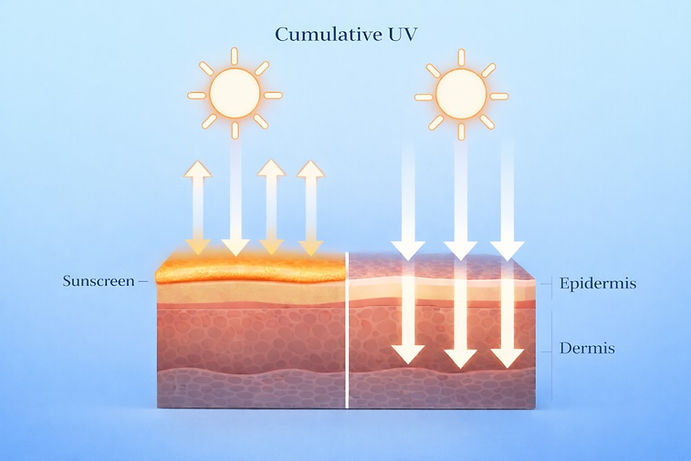
Dermatology research reviewed by New Zealand Research Review also illustrates that regular sunscreen use reduces signs of photo-ageing, including wrinkles and pigmentation changes, by limiting cumulative ultraviolet damage to the skin.
For most people, the skincare routine that delivers the greatest long-term benefit remains simple. Daily sun protection forms the foundation, supported by a gentle cleanser and a moisturiser appropriate for the skin. Active serums can be added in over time to enhance skin quality and texture, which is supported by regular skin treatments with, or without carefully timed botulinum toxin and dermal filler treatments as ageing advances.
It can be difficult knowing what the best path forward is as we are all at different ages and stages of life. This is why booking for an initial consultation at ALLOR is so important. Here you receive a personalised treatment plan including skincare prescription based on a comprehensive facial assessment and experienced professional advice. Book now to start your journey today.
An Individual, Evidence-Based Approach
- Skin is individual and does not necessarily age on a timetable.
- Two people of the same age may have very different skin needs.
- Ultraviolet exposure remains a consistent driver of long-term skin damage.
- More products do not necessarily equal better results.
- Stronger treatments used too early can limit tolerance later.
At ALLOR, we consider skincare and treatments based on each individual and their needs. Skin health and long-term goals come first. Education and clarity always matter more to us than trends.


Botox®, Prescription Medicine For the treatment of frown lines and crow’s feet around the eyes. Botox® has risks and benefits. Ask your doctor if Botox is right for you. Botulinum toxin type A 50, 100, 200 Units. For product information check with your doctor or Consumer Medicine Information on www.medsafe.govt.nz. Click for further details. Allergan, Auckland.
Belotero® Medical Device Class III to smooth facial wrinkles and folds, correct facial atrophic scars, restore or enhance the lips or restore facial volume. Belotero has risk and benefits. Ask your doctor if Belotero is right for you. For product information check with your doctor or from productdetails with the supplier. Click for further details. Contains Sodium Hyaluronate Gel. Merz, Sydney. Distributed by Healthcare Logistics, Auckland.
Restylane®, Medical Device Class III to smooth facial wrinkles and enhance lips by restoring volume and fullness. Restylane® has risks and benefits. Ask your doctor if Restylane is right for you. For product information check with your doctor or from product details with the supplier. Click for further details. Stabilised Hyaluronic Acid 20mg/Ml. Galderma, Australia, Sydney or distributor Healthcare Logistics, Auckland.
PROFHILO® containing low & high molecular weight hyaluronic acid, is a Class III medical device for the treatment of the face and body for contours redefinition and laxity remodelling where skin laxity is a problem. Profhilo® has risks and benefits. Do not use with treatments such a laser resurfacing or medium deep skin-peeling. Caution in people on blood thinning medicines. Do not inject into inflamed areas or intravenously or intramuscularly. Possible side effects: pain and swelling at injection site. Accelagen Pty. Ltd. Whanganui.
Art Filler® containing low & high molecular weight hyaluronic acid, is a Class III medical device for the treatment of facial contours for redefinition, laxity and remodelling where skin laxity is a problem. Art Filler® has risks and benefits. Do not use with treatments such a laser resurfacing or medium deep skin-peeling. Caution in people on blood thinning medicines. Do not inject into inflamed areas or intravenously or intramuscularly. Possible side effects: pain and swelling at injection site. Distributed by Cryomed Aesthetics Ltd. Auckland.
Radiesse® Medical Device Class III. Lidocaine injectable implant is indicated for plastic/reconstructive procedures in adults, including deep dermal and subdermal soft tissue augmentation of the facial area and is also intended for restoration and correction of fat or volume loss (lipoatrophy) in the facial area and for rejuvenation of the hands. Radiesse® has risks and benefits. Contains Calcium Hydroxylapatite. Ask your doctor if Radiesse® is right for you. For product information check with your doctor or Consumer Medicine Information on www.medsafe.govt.nz. Click for further details. Merz, Sydney. Distributed by Healthcare Logistics, Auckland.
Sculptra® Medical Device Class III, to increase volume of depressed areas, particularly to correct skin depressions. Sculptra® has risks and benefits. Contains Poly-L-Lactic acid implant suspension. Ask your doctor if Sculptra® is right for you. For product information check with your doctor or from product details with the supplier. Click for further details. Galderma Australia Sydney. Distributed by Healthcare Logistics, Auckland.