
ACNE & BREAKOUTS
Acne is one of the most common reasons people seek skincare advice, but it is also one of the most misunderstood.
Breakouts are often treated as a surface problem, when in reality they usually reflect deeper patterns of how the skin is functioning.
At ALLOR, we look at acne as a pattern rather than a single issue. Understanding what is driving breakouts is far more useful than cycling through products or aggressively “drying the skin out”.

What Is Acne
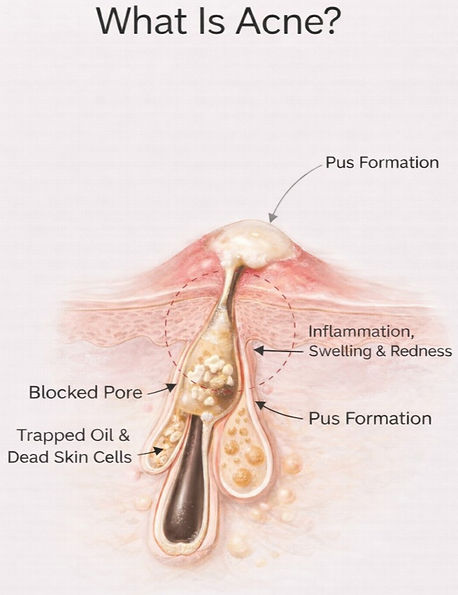
Acne is a common inflammatory skin condition that begins within the hair follicle.
Each follicle contains a hair, an oil gland and a narrow canal that opens onto the skin’s surface. When oil production increases and dead skin cells do not shed evenly, the opening can become blocked. This creates an environment where the follicle stretches, becomes irritated and may trigger inflammation.
Importantly, acne behaves differently from person to person. The pattern, severity and triggers are rarely identical. That is why treatment should be guided by skin behaviour, not assumptions.
To understand why breakouts develop, it helps to look at the underlying factors that drive them.
What Causes Acne And Breakouts
Acne develops when pores become blocked and inflamed. This usually involves a combination of factors rather than one single trigger. The mechanisms underlying acne formation are outlined by Gollnick in his 2003 review of acne pathogenesis published in Drugs.

Common contributors to acne and breakouts include:
-
Excess oil production, increasing the likelihood of pores becoming blocked
-
Impaired shedding of dead skin cells, which contributes to congestion within the pore
-
Inflammation, driving redness, tenderness, and delayed healing
-
Alterations in the skin’s microbiome, influencing how the skin responds to bacteria
-
Hormonal fluctuations, including menstrual cycles, stress-related hormonal changes, or underlying medical conditions
-
Stress, which can amplify inflammation and disrupt normal skin regulation
-
Certain medications, including hormonal therapies and corticosteroids
-
Dietary influences, which may affect acne in some individuals through metabolic or inflammatory pathways, particularly in hormonally sensitive skin
-
Lifestyle factors, such as sleep quality, environmental exposure, and consistency of skincare routines
Acne and breakouts do not all behave the same way. Some are primarily inflammatory, appearing as red, tender lesions. Others are more congestive, with blocked pores and uneven texture. These distinctions matter because they respond differently to treatment.
Common Acne Patterns We See
While acne is often grouped into “types”, in practice it is more useful to think in terms of patterns. These patterns help explain why certain treatments help some people and worsen things for others.
Common patterns include:
• Inflammatory acne
Red, tender breakouts that feel sore or swollen. This pattern is often driven by inflammation and sensitivity, and can worsen with over-exfoliation or harsh products.
• Congestive acne
Blocked pores, uneven texture, and persistent bumps under the skin. This pattern tends to respond better to gradual, consistent routines that support normal skin turnover rather than aggressive spot treatments.
• Hormone-influenced acne
Breakouts that flare cyclically or cluster around the lower face, jawline, or chin. These patterns often reflect internal drivers rather than surface issues alone.
• Adult-onset or persistent acne
Acne that begins or continues well beyond the teenage years. This pattern is often slower to heal and more reactive, particularly when the skin barrier has been repeatedly disrupted.
Many people experience more than one pattern at the same time, which is why copying a generic routine rarely works.
Where Acne Commonly Appears

Acne is not limited to the face. Breakouts can occur wherever oil glands are active or friction is present.
-
Facial acne often affects the forehead, cheeks, chin, and jawline
-
Chest and back acne (often called “bacne”) are more common in teenagers, athletes, people who sweat frequently, and those experiencing hormonal shifts
-
Body acne can also appear on the shoulders, buttocks, or upper arms, sometimes overlapping with conditions like folliculitis
Different locations often suggest different drivers, which is why treatment needs to be tailored rather than copied from someone else’s routine.
Why Acne Can Be Difficult To Settle
Many people struggling with acne have already tried multiple products, treatments or routines. In some cases, the skin has been pushed too hard in an attempt to “fix” the problem quickly.
Over-exfoliation, frequent product changes, overly harsh routines, and attempts to aggressively dry the skin can disrupt normal skin function. When this happens, inflammation increases, healing slows, and breakouts often become more persistent rather than improving.
Acne-prone skin often needs a calmer, more consistent approach before active treatments can work predictably.
Acne Is Not Just A Teen Issue
Adult acne is common and often behaves differently from teenage acne. It may be more persistent, more inflammatory and slower to heal. Breakouts can cluster around the lower face or jawline, but patterns vary.
In adults, acne is frequently linked to stress, hormonal fluctuations, or long-standing disruption to normal skin function. Treating it successfully usually requires addressing these underlying factors rather than focusing on individual blemishes.
Managing Active Acne

Active acne management is not about attacking the skin aggressively. It is about reducing inflammation, preventing new blockages and allowing the skin barrier to recover.
Gentle cleansing helps remove excess oil and debris without stripping the skin. Over-cleansing can disrupt barrier function and prolong inflammation.
Targeted ingredients such as salicylic acid, retinoids or benzoyl peroxide may be introduced at appropriate strengths. These work by supporting cell turnover, reducing congestion and limiting inflammatory activity within the follicle.
Irritation control is equally important. Using too many actives at once can increase redness, dryness and delayed healing. A balanced routine improves tolerance and consistency.
Daily sunscreen is essential during acne treatment. Inflammation increases the risk of post-inflammatory pigmentation, particularly in hormonally sensitive or darker skin types. Broad-spectrum protection reduces this risk and supports long-term skin health.
Short-term flare-ups during adjustment are not uncommon and do not necessarily mean treatment is failing. Skin that is given time to stabilise responds far more predictably than skin that is constantly being “corrected”.
Acne Scarring And Texture Changes

Once active acne is under control, some people are left with lingering marks or textural changes. These can include shallow depressions, uneven texture, or persistent redness and pigmentation.
At ALLOR, treatments such as microneedling and chemical peels may be considered to improve skin texture and support collagen renewal. These treatments are not suitable for everyone and are most effective when the skin is calm and acne activity is controlled.
Assessment is important, as treating scars while acne is still active can worsen inflammation rather than improve outcomes. A staged approach allows active breakouts to settle first, creating a more predictable environment for texture-focused treatment.
Before and after results can be viewed on the Microneedling treatment page.
When To Seek Professional Advice
If acne is persistent, painful, scarring or significantly affecting confidence, a professional assessment can help clarify what is driving the problem and what level of treatment is appropriate.
In some cases, skincare alone may be enough. In others, prescription treatment or specialist input is needed. Understanding where you sit on that spectrum helps avoid unnecessary trial and error and prevents skin from being pushed too hard without benefit.
If acne is severe, atypical, or not responding as expected, further medical assessment with a GP or dermatologist may be recommended.
How We Can Help At ALLOR
At ALLOR, acne care is approached in an individual way. The aim is not to escalate treatment quickly or apply multiple interventions at once, but to understand what is driving breakouts and build a plan the skin can tolerate and sustain.
Support may include:
• Guidance on skincare tailored to how your acne behaves and how your skin responds
• In-clinic treatments such as chemical peels, where appropriate, to help reduce congestion, inflammation, and post-acne pigmentation
• Microneedling in selected cases, particularly when acne is controlled but scarring or textural change remains
• A staged approach that evolves gradually as the skin settles and healing improves
Procedural treatments are only considered once active inflammation is adequately managed. Treating acne too aggressively, or too early, can worsen irritation and delay progress rather than improve outcomes.
If acne is severe, atypical, or not responding as expected, referral to a GP or dermatologist may be recommended. Clear escalation points help avoid prolonged trial and error.
Our focus is always on realistic outcomes, skin health, and improvements that can be maintained long term.

